31.5.10

Living: The Jacob Sheep. A decorative
sheep for stately homes, its fortunes declined
with the stately home. Now appreciated, along
with the stately home, as something useful.

28.5.10

WI shop in Stroud, Gloucestershire

Living: The Women's Institute, established in 1915, to
encourage women to contribute to society during the war.
"The WI allows no nonsense like letting men in.
It is the female reply to White's, and other London clubs
which stand firm against admitting women members.
But I hear there is a move to get away from the
"Jam and Jerusalem" image. If so they are making a
great mistake. The home-made stand at any
money-raising event is cleared out in a few minutes.
It is what people love, so why should the WI wish to get
away from that at which they excel? Jam is the thing."
—Deborah Devonshire

27.5.10


Living, quickly: Edward VI, 1537-1553.
Betrothed at 6, crowned at 9, dead at 15.
Portrait by Hans Holbein, 1538.

26.5.10

Hoy's Cart by Paul Beck b.1922

Turf Fire by Kenneth Rowntree, 1915-1977

Lady With Cat, by John Aldridge, 1905-1983

Living: The Fry Art Gallery in 
Saffron Walden, Essex. Keepers of the 
flame for the Great Bardfield artists of 
the 1950s and their contemporaries.

25.5.10

Boater

Skipper

Panama

Dressage

Top hat bucket


for all of one's summer needs.

*Since 1676.

24.5.10

Keeping very calm


Living: God. An industry which is very ancient.
From our Special Correspondent in Middle England.
My Second Sermon by John Everett Millais, 1864.

20.5.10

Telegram by Rex Whistler, 1936

Extinct:
"Can we bring back: scythes, brogues, mourning,
silence, housewives, telegrams, spring cleaning,
snow in January instead of at lambing time, nurses
in uniform, muffins, the 1662 prayer book, pinafores
for little boys, Ethel Merman and Elvis Presley?"
—Deborah Devonshire
Sunrise furnishing fabric, by
Lucienne Day for Heal's, 1969

Cotton bathing costume,
by Bimba, c. 1936-40

Fashion plate by Horace Vernet, 1814

founded in 1852. Too vast a subject, but
presented are 3 small reasons to worship.

19.5.10

Living: Schoolboys and badges.
ABC Minors, 1955 by Peter Blake.

18.5.10

Living: Thomas Crapper, (1836-1910).
Inventor of the Marlboro Silent Water
Waste Preventer. Read the compelling
history of the toilet by Bill Bryson.

17.5.10

Hares Arunning (part 1)

Hares Arunning (part 2)

Moonlit Caravan

Winter Cottage

Living: Stained glass, by Tamsin Abbott
A Herefordshire cottage-dwelling, 

14.5.10


Living: The Science Museum, which isn't all scientific.
Photographs of the agriculture gallery by Shelf Appeal.

13.5.10

Enid Marx, block print on galled linen

Enid Marx, block print on organdie

Enid Marx, block print on organdie

Neisha Crosland, Zebra, printed paper

Neisha Crosland, Tudor Rose, pigment print on linen

Neisha Crosland, Maize, printed paper

Living: Neisha Crosland, re-interpreting Enid Marx.
Top three textiles from the Visual Arts Data Services.
Fez, woven wool, Neisha Crosland

Question: In the spirit of London Transport's
association with leading designers, why not
ask Neisha Crosland to design a moquette?
Bricklayers would probably like it.

12.5.10


Lozenge, c. 1940

Living: London Transport moquette, 
here designed by Enid Marx (1902-1998). 
The brief: Make it look fresh all the time, 
even after a bricklayer has sat on it. 

11.5.10

Carte de visite by Bassano, NPG.


Living: The Victoria sponge cake.
Named after the Queen, who was evidently fond.
(NB: Delia would now use butter, not margarine).

10.5.10

Queen Victoria's granddaughter, Victoria

with hat

(Louis, Alexander, Henry + Francis Joseph)

Living: The Battenberg cake. Created in honour
of Princess Victoria's wedding to Louis Battenberg,
one of 4 dashing Austrian princes, in 1884. The
name was anglicized to Mountbatten in 1914.
Portraits by Bassano, cake by Jane Brocket.

7.5.10

The Unmade Bed, by Lionel Bulmer

At the Butcher's, by Lionel Bulmer

Misty Morning, Seaton Carew, by Margaret Green

Terrace House, by Margaret Green

Living: The art of Margaret Green (1925-2003) and 
Lionel Bulmer (1919-1992), a union that celebrated 
quiet domesticity. Paintings available at Messum's.

6.5.10

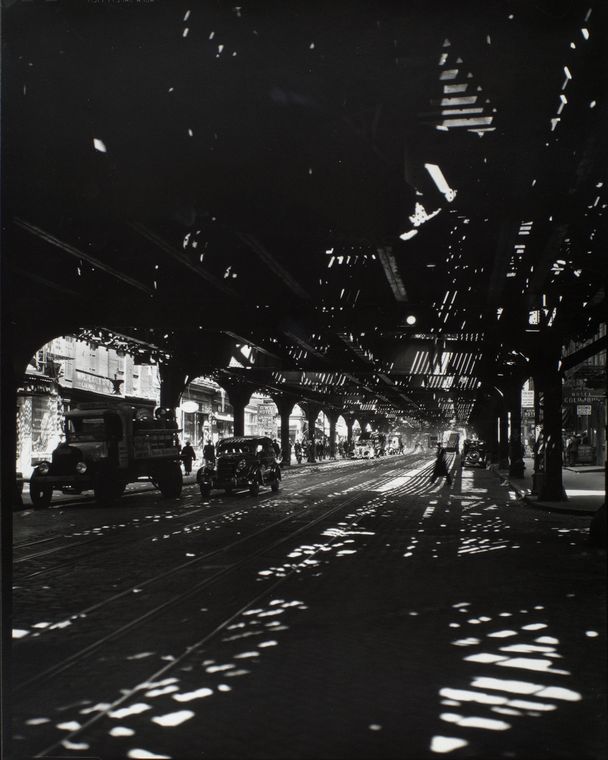
3rd Avenue line, 
Bowery and Division Street, 1936

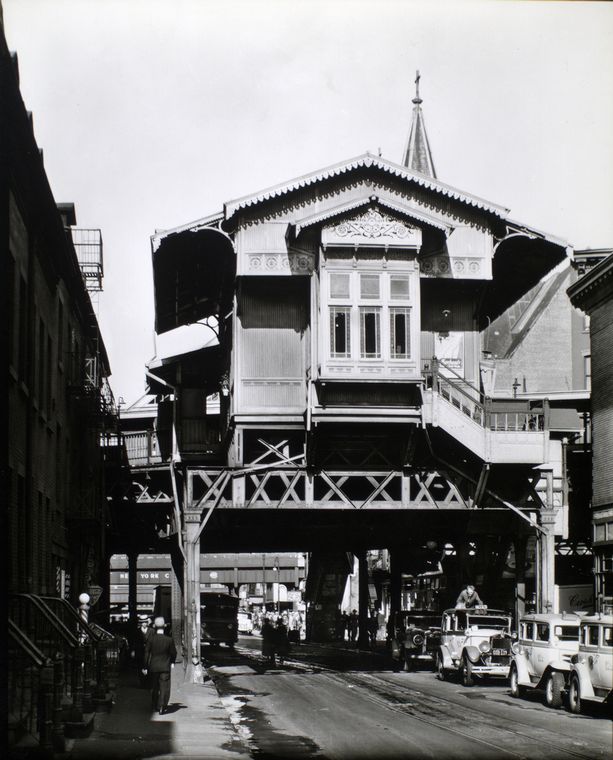
9th Avenue line, 
Christopher and Greenwich Streets, 1936

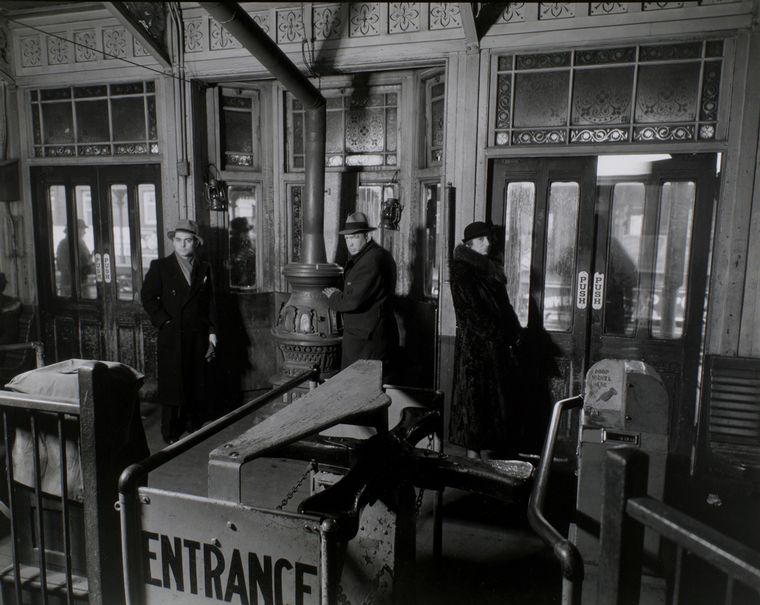
9th Avenue line, downtown side, 
72nd St and Columbus Ave, 1936

Extinct: The 'El'. Once a steam train that puffed 
up and down Manhattan 3 stories up, it converted to 
electricity in 1903, before being demolished in 1955.
All photographs by Berenice Abbott, at the NYPL.

contributors

Reed Wilson, Kendra Wilson